Thursday, February 16, 2012

How well do YOU know your food?

Test your health IQ with this quick quiz.

If you want to, you can leave your score in the comments section. It will be interesting to compare how well people REALLY know their food!


How health savvy are you?
By Melanie McGrice, Accredited Practising Dietitian

Sure you can spot an apple in a fruit line-up but let's test your knowledge with some other common foods in your diet! Try this quiz to get a really close look at the foods you're eating and see how health savvy you are! Answer each of the 10 questions TRUE or FALSE, you will get 1 point for every correct answer! Why not get your family and friends involved and try and answer the questions together. Let's have a little fun with your food!


1. Consumption of too much cola can cause osteoporosis
TRUE or FALSE


2. A slice of bread has more kilojoules than a glass of red wine
TRUE or FALSE


3. Eggs should be avoided if you have high cholesterol levels
TRUE or FALSE


4. A diet rich in omega-3 fatty acids may reduce your risk of
developing Alzheimer's disease
TRUE or FALSE


5. A high intake of aspartame artificial sweeteners is one of the
main causes of cancer in Australia
TRUE or FALSE


6. Low GI white bread is just as healthy as wholemeal bread
TRUE or FALSE


7. Full cream milk is high in fat
TRUE or FALSE


8. Margarine is high in trans fats
TRUE or FALSE


9. Most nuts contain at least 50% fat, therefore, should be avoided
by people who want to lose weight
TRUE or FALSE


10. If a product has 300mg of salt (sodium) per 100g as recorded on the nutritional label, it is considered to be a low salt option
TRUE or FALSE


ANSWERS:
  1. TRUE. Cola based drinks contain caffeine and phosphoric acid which have been shown to adversely affect the bone and hence bone mineral density.
  2. FALSE. An average 30g slice of bread contains approximately 300kJ/70cal whereas a 160ml glass of dry red wine contains a whopping 450kJ/107cal.
  3. FALSE. The Heart Foundation recommends that up to six eggs per weeks can still be enjoyed as long as you are consuming a diet which is low in saturated sat.
  4. TRUE. Emerging research suggests that omega-3 docosahexanoic acid (DHA) may play an important role in the prevention of late onset Alzheimer's disease.
  5. FALSE. According to Cancer Council of Australia, there is no evidence that artificial sweeteners cause cancer, or are at all unsafe in the doses consumed.
  6. FALSE. Wholemeal bread contains bran and wheatgerm which make the bread less energy dense and more nutrient rich than refined white bread. Breads with whole grains are healthier for us as they contain a myriad of vitamins, minerals, phytochemicals, and other nutrients in the inner and outer layers of the grain.
  7. FALSE. Even full cream milk contains only 4% fat, whereas skim milk contains less than 1% fat.
  8. FALSE. Most margarines in Australia contain negligible amounts of trans fats.
  9. FALSE. Incorporating a small portion of nuts such as almonds, walnuts or pistachios into a balanced diet can assist with weight maintenance as they are high in protein and fibre, so are more filling than many other snack food choices.
  10. FALSE. A ‘low salt’ food is defined as a food with a sodium concentration of no more than 120 mg per 100 g. The National Health and Medical Research Council (NHMRC) recommends that Australian adults consume less than 2,300 mg of sodium per day (equivalent to about 6,000 mg (6 g) of salt).
FINAL SCORE:

9-10. Excellent! You know the facts about your food and am up to date with the latest nutritional research.
6-8. Good work. You answered most questions correctly and have a good general knowledge on nutrition.
1-5. Good try! You might want to brush up on some facts on the latest findings that can help you improve your health and wellbeing.

It's important to know the facts about what you are eating. Take some time and do some research - because you ARE what you eat!

JW


References
  • www.morethanmedication.com.au

Monday, February 13, 2012

Fitness Programs 101 series: Yoga

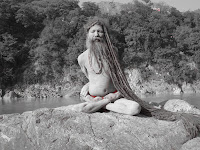
Imagine meditating while repeatedly chanting aum...aum...aum...aum...For some this is enough to make them fall into a deep slumber (unintentionally, that is), for others this is just one example of a disciplined and effective way of achieving total relaxation and control over the mind and body.


A BIT OF BACKGROUND
Yoga has been around for a very long time, originating in India more than 5000 years ago. Evidence of these origins were found by archeologists in the early 1900s. While excavating at the Mohenjo Daro in the Indus Valley, Sir Mortimer Wheeler, a renowned British archeologist discovered carvings and sculptures depicting poses of humans and animals resembling those practiced by yogis. The artefacts have been dated to 3000 BC.

Sir Mortimer Wheeler's discovery of horn-capped figures sitting in positions which are advanced Yogic postures.
The most famous of these seals is that of an ithyphallic deity now recognised as Shiva.

The word 'Yoga' means “to join or yoke together”, and it aims to bring the mind and body together into one harmonious experience. In yoga, the body is viewed as a temple - a sacred sanctuary that helps us function and evolve in the world.

"The whole system of Yoga is built on three main structures: exercise, breathing, and meditation. The exercises of Yoga are designed to put pressure on the glandular systems of the body, thereby increasing its efficiency and total health."

YOGA FOR FITNESS
There are many different types of yoga practiced around the world. I will discuss in further detail some of the more well known practices.


TYPES OF YOGA
ASHTANGA/VINYASA ASHTANGA
Ashtanga yoga is a dynamic form of yoga consisting of powerful, athletic movements. The movements are sequential and must be performed in this order. Ashtanga literally means 8-limbed which represents the 8 spiritual practices:
  1. Yama (moral codes)
  2. Niyama (self-purification and study)
  3. Asana (posture)
  4. Pranayama (breath control)
  5. Pratyahara (sense control)
  6. Dharana (concentration)
  7. Dhyana (meditation)
  8. Samadhi (absorption into the Universal)
"This method of yoga involves synchronising the breath with a progressive series of postures — a process producing intense internal heat and a profuse, purifying sweat that detoxifies muscles and organs. The result is improved circulation, a light and strong body, and a calm mind."


BIKRAM
Bikram yoga is a sequence of 26 postural poses performed in a heated room. Developed by Bikram Choudhury, an Indian yoga guru, in the 1970s, as a way to "systematically work every part of the body, to give all the internal organs, all the veins, all the ligaments, and all the muscles everything they need to maintain optimum health and maximum function" while at the same time flushing out impurities due to increased perspiration in a 37°C/105°F room.

So why the need for heat? Heat warms up the muscles faster allowing them to work deeper and develop greater flexibility.

HATHA
Hatha yoga is what most people refer to a simply 'yoga'. It is gentle and slow-paced, focusing heavily on the breath and stretching the muscles in static positions with meditation playing a vital part.

'Hatha' means Ha (Sun) + Tha (Moon) and is a union of opposing forces providing "a path toward creating balance and uniting opposites." This form of yoga is all about creating balance between the physical and the psychological and to "further promote the energy flow of the body & relaxation to settle the nervous system & calm the mind".

This is perfect for beginners - giving them an introduction into the world of yoga.


In this day and age where life is so chaotic and fast, practising yoga can help you to relax and slow things down (even if only for a hour). So give it a go and invite some calm into your life.

JW


References
  • www.americanyogaassociation.org
  • www.ashtanga.com
  • www.bikramyoga.com
  • www.exoticindiaart.com/articleprint/yoga
  • www.hathayoga.com.au
  • A history of yoga (1982). Vivian Worthington

Wednesday, January 25, 2012

Fitness Programs 101 series: Boot Camp

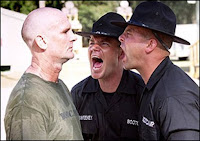
"GET DOWN AND GIVE ME TWENTY!!!" Not the most pleasant thing to hear first thing in the morning, but there are plenty of bleary-eyed enthusiasts (and not so enthusiasts) who put up with it. Why you may ask? Well hopefully this article will answer that question.


You're only as strong as your weakest member - this could not ring more true about Boot Camp where the emphasis is put on teamwork. It doesn't matter whether you are the fittest, fastest, slowest or weakest; everyone plays a vital role in the success of the team.


A BIT OF BACKGROUND
Boot camp originates from the military - the proper terminology is recruit basic training. It is a method used to filter out new recruits by pushing them to their limits physically, mentally and emotionally. A 6-13 week program of extreme intense military training aims to build fitness, camaraderie, leadership and commitment.


"If you have the courage to succeed, this program will help you develop into a mature, highly disciplined, and fully capable service member. During this time, Drill Instructors (DI) will teach you how to care for yourself and others, function as a member of a team and to achieve success together."


"The DI are responsible for ensuring recruits are fully prepared to meet the everyday challenges, from the dangers of the battlefield to the rigours of life at sea. You will be given the tools necessary to perform any given task with the efficiency, courage and confidence to succeed in the face of adversity."

Recruit Training also includes first aid, water survival skills, marksmanship, tactics and other related topics.


There is no 'I' or 'ego' in 'team'. This is evident in the camouflage gear recruits are required to don. The uniform signals equality and sameness - no-one is better than anyone else.

BOOT CAMP FOR FITNESS
Boot Camp for fitness takes the fundamentals from the military training and translates it into a workout program suitable for anyone who is willing.

Most boot camps are run outdoors, to mimic a military environment. The exercises can range from individual tasks to team activities and usually take place either at a park or on the beach.


On any given morning, you will see plenty of city workers sweating their way through a class. Boot Camp before work has become a very popular workout. A typical program is usually run 2-3 mornings a week for 4 weeks.

At the end of the Boot Camp program, participants feel not only a sense of self-accomplishment, but team-accomplishment.

Unus pro omnibus, omnes pro uno. One for all and all for one.

JW


References
  • www.military.com

Thursday, January 5, 2012

Fitness Programs 101 series: Pilates

Pilates has slowly increased in popularity over the years and now is very much part of mainstream fitness. In the past it was considered more of an alternative form of exercise mainly used for rehabilitative purposes, but is now largely available at most gymnasiums worldwide.

SO...WHAT IS PILATES?
Pilates is a conditioning exercise designed to improve spinal posture; increase strength - particularly of the core, flexibility and muscular endurance; and develop long, lean muscles. It encourages awareness of one's body starting with breathing, which in turn helps your body function at its optimum level.


A BIT OF BACKGROUND
Joseph Humbertus Pilates was born in Germany in 1880 to a prize-winning gymnast father of Greek heritage and a naturopath mother.

As a child Joseph suffered from numerous illnesses including: asthma, rickets, rheumatic fever. And as a result began his interest in health by studying anatomy and reinforcing his learnings by observing animals in the woods - “Take a horse, if a man wants to race him, he keeps him in top form. He makes the horse move. Why not keep humans in top form too?"

Joseph Pilates preforming a single leg row on an early version of a pilates reformer bed

In 1912, Joseph moved to England. When World War I broke out, he was imprisoned due to his German citizenship, along with other German nationals. While in prison camp, Joseph observed animals stretching and incorporated this into the foundation of his matwork. He taught his fellow prisoners exercises using reassembled camp beds, with the springs acting as a form of resistance.

The effectiveness of his methods were proven following the influenza outbreak in 1918. The pandemic killed somewhere between 50-100 million people worldwide with those in close cohabitation were hit the hardest. Unbelievably, those who followed Joseph Pilates' exercise routines all survived the outbreak.

Joseph originally named his exercise method "Contrology". It was his belief the mind controlled all muscular movements through centred concentration - "The Pilates Method teaches you to be in control of your body and not at its mercy."

TYPES OF PILATES
1. Matwork
The traditional method of pilates, performed on mats. Exercises are performed on your back, side or front. Sometimes equipment (eg. weights, resistance bands, rollers, exercise balls) is used.
Examples of mat exercises: pelvic curl, the hundred, bridge, rocker


2. Reformer beds
A spring-loaded machine with a moving carriage. The springs act as resistance - the more springs, the higher the resistance.


3. Pilates Cadillac
A large piece of equipment featuring leg springs, arm springs, hanging loops, a push-through bar and a trapeze. Over 80 exercises can be performed from gentle spring-assisted sit ups to advanced acrobatic movements.


4. Winsor Pilates
This method of Pilates was developed by Mari Winsor, a dancer and teacher from Hollywood, California. Combining matwork and cardiovascular movements, Winsor Pilates provides a low-intensity body sculpting workout which burns calories for weight loss.


5. Stott Pilates
A contemporary approach to traditional Pilates. Joseph Pilates initially developed machines that users had to adapt to. With Stott Pilates, the machines adapt to you.


For me personally, Pilates holds a very special place in my heart. Pilates was my long awaited solution to years of excruciating back pain. I had tried everything on the market - physios, chiros, GPs, medications, rest; but none provided me with permanent relief.

Pilates made me understand the cause of my pain and how I could rectify the situation to prevent it from happening in the future. And I am very happy to say it worked!

So do something good for your body and try Pilates today!

JW


References
  • www.josephpilates.com
  • www.livestrong.com

Monday, January 2, 2012

To new beginnings

A new year has arrived and what a great opportunity to start fresh. Don't worry about what you did or didn't do last year - you have a clean slate and NOW is the time to take charge of your life!


The festivities have come and gone so no more excuses. Say "YES I CAN" instead of "no I can't". Challenge yourself and make the most of all your opportunities; face your fears and tackle them head on.


Make 2012 the year you do something positive to improve yourself. And keep watching out for new and exciting articles I have in store for the year ahead.

So here's a toast to a happier and healthier you in 2012!!!


★★ HAPPY NEW YEAR EVERYONE!!! ★★

JW

Thursday, December 22, 2011

Staying Festive and Fit!

Since it's the festive season I've decided to take a break from the Fitness Programs 101 series. I will continue the rest of the series in the new year.


This weekend most of us will be gorging ourselves with turkey, ham, pudding, eggnog, alcohol, cookies and pies. Some of us may even eat multiple Christmas meals, and then New Years is just around the corner. So basically for a week we will be celebrating by eating, eating and eating more!


So how do we enjoy the festivities without showing evidence around our waistlines? Here are some helpful tips:
  • Eat slowly and chew your food properly - Christmas lunches and dinners tend to go on for a little while so eating slowly and chewing your food properly will aid digestion and prevent you from overeating.
  • Walk around and mingle - we tend to sit or sleep after a big meal so why not walk around, mingle and catch up with those you haven't seen in a while.
  • Don't give into peer pressure - enjoy your food and drink but follow the rules YOU have set for yourself and don't feel pressured to follow other's bad habits.
  • Keep yourself hydrated - drink plenty of water, this will help to dilute the alcohol and prevent you from overeating.
  • Don't stand next to the food or drink - if you are having a buffet style meal or pre-dinner snacks, make sure to stand far away from the food tables. You will be more likely to eat/drink something if it is near you.
  • Try alternatives - if you are helping to cook for Christmas, try and use healthier alternatives. Eg. use olive oil instead of butter, herbs and spices to flavour instead of salt, try fresh fruit or brown sugar instead of white sugar.
  • Stick to your routine - just because you are on holidays from work doesn't mean you should take a holiday from exercising!

I want to thank each and every one of you for reading and supporting my blog in 2011. You are the reason I write these articles and I hope you are inspired to make a healthy change to your life.

Wishing you all a very Merry Christmas and a safe and Happy New Year!!!

See you in the new year!

JW