With the first month of the new year nearing its end, many of us may or may not have already given up on our New Year's resolution. When the new year ticks over, we like to make resolutions to eat better, exercise more and decrease our stress levels. One way people try to improve their diet is through the consumption of fruit smoothies.

Fruit smoothies such as those sold at Jamba juice in the US, Boost Juice in Australia, Crussh in the UK and even McDonald's, are promoted as healthy options packed full of fruity goodness, but there is more than meets the eye to these seemingly nutritious options.
Everyone knows that a healthy diet should include 5 serves of vegetables and 2 serves of fruit. Yes it is easy to consume those 2 serves in a fruit smoothie but don't forget you get much more than you bargained for especially in terms of sugar content. As you can see below, all the smoothies have a much higher sugar content than a standard soft drink.

The extra sugar content comes from other ingredients included in the smoothie such as fruit yoghurt, fruit juice, ice cream and in some instances, syrup. And on top of that, many of the smoothies have the equivalent amount of calories as a standard meal.
In a comparative study conducted in the UK, the nutritional value of 52 smoothies from leading brands and supermarkets showed the following:

Yet even more worrying is the fact that the serving size of fruit smoothies sold at juice bars and food outlets range from about 400ml all the way up to 800ml - much bigger than the 250ml size used in the study.
Here are the nutritional statistics of some of the most popular fruit smoothies currently on the market:
Jamba Juice Original Mango-A-Go-Go Smoothie (original):
Calories: 400
Total fat: 1.5g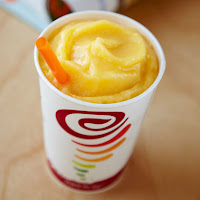
Total carbohydrates: 94g
Sugar: 85g
Dietary fibre: 3g
Protein 3g
McDonald's Banana Berry Bash (large):
Calories: 342
Total fat: 2.8g
Total carbohydrates: 73.1g
Sugar: 66.3g
Protein: 3.8g
Crussh Breakfast Smoothie (large):
Calories: 459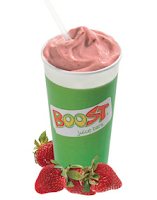
Total fat: 6.3g
Total carbohydrates: 80.1g
Sugar: 47.25g
Dietary fibre: 5.85g
Protein: 20.7g
Boost Juice Strawberry Squeeze (original):
Calories: 390.4
Total fat: 6.71g
Sugar: 68.32g
Dietary fibre: 4.27g
Protein: 9.76g
So just beware the next time you feel like having a smoothie. Go for some fresh fruit instead or if you are experiencing serious cravings, opt for a smaller serving size.
JW

Fruit smoothies such as those sold at Jamba juice in the US, Boost Juice in Australia, Crussh in the UK and even McDonald's, are promoted as healthy options packed full of fruity goodness, but there is more than meets the eye to these seemingly nutritious options.
Everyone knows that a healthy diet should include 5 serves of vegetables and 2 serves of fruit. Yes it is easy to consume those 2 serves in a fruit smoothie but don't forget you get much more than you bargained for especially in terms of sugar content. As you can see below, all the smoothies have a much higher sugar content than a standard soft drink.

The extra sugar content comes from other ingredients included in the smoothie such as fruit yoghurt, fruit juice, ice cream and in some instances, syrup. And on top of that, many of the smoothies have the equivalent amount of calories as a standard meal.
In a comparative study conducted in the UK, the nutritional value of 52 smoothies from leading brands and supermarkets showed the following:

Yet even more worrying is the fact that the serving size of fruit smoothies sold at juice bars and food outlets range from about 400ml all the way up to 800ml - much bigger than the 250ml size used in the study.
Here are the nutritional statistics of some of the most popular fruit smoothies currently on the market:
Jamba Juice Original Mango-A-Go-Go Smoothie (original):
Calories: 400
Total fat: 1.5g

Total carbohydrates: 94g
Sugar: 85g
Dietary fibre: 3g
Protein 3g
McDonald's Banana Berry Bash (large):
Calories: 342
Total fat: 2.8g
Total carbohydrates: 73.1g
Sugar: 66.3g
Protein: 3.8g
Crussh Breakfast Smoothie (large):
Calories: 459

Total fat: 6.3g
Total carbohydrates: 80.1g
Sugar: 47.25g
Dietary fibre: 5.85g
Protein: 20.7g
Boost Juice Strawberry Squeeze (original):
Calories: 390.4
Total fat: 6.71g
Sugar: 68.32g
Dietary fibre: 4.27g
Protein: 9.76g
So just beware the next time you feel like having a smoothie. Go for some fresh fruit instead or if you are experiencing serious cravings, opt for a smaller serving size.
JW