Showing posts with label nutrition 101. Show all posts

Monday, December 29, 2014

My favourite things!

As we make our way through the festive season, it's hard to believe another year is drawing to an end. And if Oprah gets to have her annual list of favourite things then so can I! To celebrate the festive season, here are some of my favourite things for the year.

1. FAVOURITE FITNESS APPS

NIKE Training Club

What It Is: This app features more than 100 full-body - 15, 30 and 45 minute workouts (complete with step-by-step audio, visual, and video demos) from some of the world’s most inspirational female athletes, trainers, and celebrities.

Why It's Cool: Get lean, get toned, get strong: You choose! Tailored workout programs make this app uniquely functional, regardless of your fitness goals. Whether you’re opting for a 4-week program tailored to your abilities or supplementing your regular workout sessions, this app goes above and beyond basic instructions to measure your progress in number of workouts, minutes logged, and average calories burned.

Cost: Free. Available for iOS and Android.


Argus

What It Is: Argus tracks everything — and we mean everything — 24/7. The app monitors every step, stride, cycle, bite, sip, pound, snore, and more. Constantly processing your daily routine, Argus produces detailed charts that can help you make sense of numerous bio-feedback data points to reach your health goals and improve overall wellbeing.

Why It's Cool: Argus is pretty much a health diary you don’t have to remind yourself to write in. It allows you to uncover important trends in your personal health habits that you didn’t even know were there. Not only is the interface sleek and intuitive, but Argus is easy on the battery (even for a 24/7 monitor).

Cost: Free. Available for iOS.


2. FAVOURITE FOODS

Freshii 

Freshii is a fast-food franchise that focuses on custom built fresh food. Founded in 2005 by Canadian Matthew Corrin, Freshii allows customers to choose from a wide selection of chef-designed items, or create their own salad, wrap, bowl or soup with over 70 fresh ingredients and dressings.

Freshii is available in over 60 cities and 12 countries worldwide with more stores to open in the future.


B in the Raw @ POD Espresso

B in the Raw are a range of delicious treats with hidden superpowers (created by a talented friend of mine). With no artificial sugars and preservatives, these treats are made with the best ingredients including raw vegan protein powder and Chinese medicinal powders. And depending on the season, additional super ingredients are added (eg. during spring and high pollen periods, the inclusion of herbs and powders with high antihistamine properties too)

Available at POD Espresso @ 305 Bay Street, Brighton, Melbourne, there are usually two protein ball flavours each week, a raw protein bar and some raw cakes as well.

Here are some of the goodies you can try:

Acai Bowl Raw Cake
Raw Caramel Slice
Neapolitan Raw Cake
Key Lime Pie Balls
Tumeric Lemon Balls
Just Salad

Just Salad is a fast-food franchise that provides quality, healthy food in a fast, responsible, yet affordable way. The specially designed menu has been created with the expertise of registered dietitian and chef, Laura Pensiero. The culmination of Laura's culinary and nutritional knowledge ensures the following promises:


With 20 stores spread across New York, New Jersey, Hong Kong and the United Arab Emirates, a truly healthy meal is not too far away. Just Salad understands the importance of providing complete and accurate nutrition information to their customers and provide this in the form of a nutritional portal on their website which can be used in three different ways:
  • Nutrition Calculator
  • Interactive Nutrition Menu
  • Allergen Menu
3. FAVOURITE APPAREL

Lululemon Athletica

Lululemon Athletica is a yoga-inspired athletic apparel company that caters for both men and women. With technical athletic apparel for yoga, running, dancing, and most other sweaty pursuits, Lululemon fuses style, performance and comfort. 

With 348 locations across the US, Canada, Australia, New Zealand, UK, Germany, China, Netherlands and Singapore, and shipping to numerous other countries, Lululemon is easily accessible. Their products can be a bit pricey so look out for the 'We made too much' tab on their website for lots of specials!


Sportsshoes.com

SportsShoes.com is the leading specialist running and fitness retailer in the UK. Stocking over 9000 products, including an extensive range of the best running shoes from brands including Nike, Adidas, ASICS, Saucony and New Balance, as well as a wide range of running apparel, equipment and accessories.

With highly competitive prices in seven different currencies and free delivery, Sportsshoes.com is the place to go for all your sporting apparel needs.


So here's to another year. Thank you all for your support, it has truly been appreciated. Wishing you all a very happy holiday and a safe and Happy New Year!!! See you all in 2015 =D

JW

Tuesday, March 19, 2013

Sushi lovers BEWARE!

In the past few years gastronomically speaking, sushi has become the new black. Every man, woman and child seems to be chowing down on these delicious, delicate and healthy delights. In the battle against the ever-increasing obesity crisis, this is a good thing, right?  Research indicates otherwise.

So before you take another bite of that luscious combination of delightful texture and subtle flavour creation that creates happiness in your mouth, please read:

How sushi can make you FAT

By Juliette Kellow, Daily Mail


IT will shock skinny celebs who swear by it, but sushi can have more kilojoules than a Big Mac.

Sushi is no longer the sole preserve of the adventurous diner. These days, grabbing a pack for lunch is almost as common as picking up a cheese and ham sandwich. The Japanese dish can be bought from every major supermarket, sushi train restaurants are popping up everywhere, as well as stores selling take-away sushi packs.


The main reason for its surge in popularity is its reputation as a healthy meal. Japanese women are among the healthiest in the world, while slender celebrities such as Victoria Beckham, Cheryl Cole and Keira Knightley are all fans of the raw fish dish.


But do sushi's nutrition credentials - especially the Western version - stack up? Not always, according to dietitian Rachel Beller. In her book Eat To Lose, Eat To Win, she says a "light lunch" of sushi may mean you overdose on kilojoules and carbohydrates.

"A typical sushi roll contains 290 to 350 calories (1464 kilojoules) and has the carbohydrate equivalent of two-and-a-half to four slices of bread, so a California roll (round rolled sushi, containing a small piece of fish and avocado plus fatty mayonnaise) equals two sandwiches filled with crab sticks (processed fish that is flavoured and coloured to look and taste like crab), a sliver of avocado and a tiny bit of veg."


Bear in mind a sushi lunch contains two or three of these rolls, a total of up to 4393 kilojoules, and it's easy to see how we're conning ourselves that we're enjoying a low-joule, healthy lunch!

Here we show you why you should put the chopsticks away . . .

1. THERE'S HARDLY ANY FISH
Many of us believe eating sushi is a good way to get the Government's recommended two portions of fish each week, but here's the problem: most sushi contains very little protein, despite its expense.

Health experts say a portion of fish should weigh 140g, but on average, the fish in a California roll or piece of nigiri (rice with fish balanced on the top) weighs just 5g. You'd need to eat 28 pieces of sushi to reach your 140g portion - or more, if you choose a mixed sushi box containing vegetarian varieties.

Sashimi - slices of raw or seared tuna or salmon - is a better option if you're keen on boosting protein, omega-3 fats, vitamins and minerals. This form of Japanese food is low in processed carbohydrates.


Government guidelines recommend pregnant and breastfeeding women (or those who want to get pregnant) eat no more than two portions of oil-rich fish (salmon, mackerel, trout or fresh tuna) each week as it can contain pollutants that can affect a baby"s development. All other adults should have no more than four portions a week.

Tuna can also contain mercury, a toxin that can affect the kidneys and nervous system. While it's fine to eat shop or restaurant sushi when you're pregnant (by law it must be frozen to kill parasitic worms that can cause nausea, vomiting, diarrhoea and stomach pain), the Department of Health advises pregnant or breastfeeding women to avoid shellfish, such as shrimps, prawns, crab or scallops, which can contain viruses and bacteria.

2. FULL OF PROCESSED CARBS
Stodgy white rice is the main ingredient in sushi - sometimes making up as much as 75 per cent of the dish. Like long-grain white rice, it is heavily processed, causing it to lose vitamins, minerals and fibre, the last of which is important for maintaining a healthy digestive system - and filling us up.

Sushi rice isn't just boiled in water, it also has considerable amounts of sugar, plus sugary rice vinegar added to it as flavouring. This means your "healthy" sushi lunch may contain little more than mouthfuls of processed, sugary carbohydrates.

Itsu's Best Of Itsu Sushi Box , which contains 13 small pieces of assorted sushi, has 53g of carbohydrate - the equivalent of three slices of white bread.

3. FORGET YOUR SEVEN-A-DAY
Your sushi might be wrapped in a flimsy sheet of seaweed (packed with fibre, iron, calcium and potassium), but this small amount contributes little nutritionally to your recommended seven-a-day (five servings of vegetables and two of fruit).

Eat six California rolls and you'll get just 1g of seaweed wrapping - that doesn't even come close to providing 1 per cent of a woman's daily iron or calcium. Meanwhile, the tiny cube of cucumber, avocado or pepper you get has minimal nutritional value, too.

You'd need to eat a lot of sushi to get the 80g to count as one of your seven-a-day. Even vegetarian varieties don't come close - you'd need to eat six packs to get one of your seven-a-day - and that would provide 3940 kilojoules, 13 teaspoons of sugar and a massive 10.5g of salt (which is almost two days' worth).

4. IT'S VERY SALTY
Sushi is also stuffed with salt. A Bento Box commonly contains four-and-a-half grams of salt - that's well above the daily recommended maximum of 4g.

Part of the reason is that the rice is cooked with salt and sometimes soy sauce. Smoked fish such as salmon or mackerel, and pickled vegetables and ginger are also loaded with salt.

Just one piece of salmon, tuna or prawn sushi contains a quarter of a gram of salt, while one California roll has almost half a gram - munch on four California rolls and four pieces of nigiri and that's almost half of your daily salt intake.

And that's before you add the soy sauce - just one tablespoon can contain almost 3g of salt, or almost half the total amount you should have in a day.

Regularly eating too much salt increases the risk of high blood pressure and increases the risk of heart disease and stroke.

5. IT CAN WRECK YOUR DIET
Sushi has been touted as a great choice for dieters - and it can be. But not all sushi boxes are low in kilojoules and fat. Sushi Train's Volcano Roll has 1538kj per 100 grams - comparatively, a Big Mac has 1030kj per 100 grams.

Those with big appetites may not find the small sushi servings filling enough to see them through the day. Much sushi lacks filling fibre and satiety-inducing protein.

And never assume sushi is low-kilojoule. High-fat ingredients - cream cheese and mayonnaise, for example - often find their way into Western versions of sushi, pushing up the calorie count.


Sushi often contains fewer nutrients than you'd find in a sandwich. It's low in calcium (due to the lack of dairy products) and provides little vitamin A, vitamin C and folate (which helps sustain a healthy nervous system).

6. IT'S RARELY WHEAT FREE
Sushi may seem a good choice if you need a gluten-free diet - after all, it's just fish and rice. But if it contains soy sauce (often used as a seasoning) it's unsuitable, as this includes wheat.

Check labels if you have coeliac disease or are intolerant to wheat, and look for a gluten-free alternative to soy sauce.

HOW TO MAKE IT HEALTHIER
  • Skip the soy sauce: it's like dipping your sushi into liquid salt. If you eat sushi at your desk, keep a bottle of reduced-salt soy sauce in your drawer (and measure it out with a spoon rather than pouring liberally).
  • Finish your meal with fresh fruit, so you can be sure you'll get at least one of your seven-a-day.
  • Don't have miso soup with your sushi. With around 3g of salt per serving, you're better off with a cup of green tea.

So now that you've read the facts, make sure to take these into account the next time you have a craving for sushi!

JW

Sunday, January 27, 2013

Not so smooth...

With the first month of the new year nearing its end, many of us may or may not have already given up on our New Year's resolution. When the new year ticks over, we like to make resolutions to eat better, exercise more and decrease our stress levels. One way people try to improve their diet is through the consumption of fruit smoothies.


Fruit smoothies such as those sold at Jamba juice in the US, Boost Juice in Australia, Crussh in the UK and even McDonald's, are promoted as healthy options packed full of fruity goodness, but there is more than meets the eye to these seemingly nutritious options.

Everyone knows that a healthy diet should include 5 serves of vegetables and 2 serves of fruit. Yes it is easy to consume those 2 serves in a fruit smoothie but don't forget you get much more than you bargained for especially in terms of sugar content. As you can see below, all the smoothies have a much higher sugar content than a standard soft drink.


The extra sugar content comes from other ingredients included in the smoothie such as fruit yoghurt, fruit juice, ice cream and in some instances, syrup. And on top of that, many of the smoothies have the equivalent amount of calories as a standard meal.

In a comparative study conducted in the UK, the nutritional value of 52 smoothies from leading brands and supermarkets showed the following:

Yet even more worrying is the fact that the serving size of fruit smoothies sold at juice bars and food outlets range from about 400ml all the way up to 800ml - much bigger than the 250ml size used in the study.

Here are the nutritional statistics of some of the most popular fruit smoothies currently on the market:

Jamba Juice Original Mango-A-Go-Go Smoothie (original):
Calories: 400
Total fat: 1.5g
Total carbohydrates: 94g
Sugar: 85g
Dietary fibre: 3g
Protein 3g

McDonald's Banana Berry Bash (large):
Calories: 342
Total fat: 2.8g
Total carbohydrates: 73.1g
Sugar: 66.3g
Protein: 3.8g

Crussh Breakfast Smoothie (large):
Calories: 459
Total fat: 6.3g
Total carbohydrates: 80.1g
Sugar: 47.25g

Dietary fibre: 5.85g
Protein: 20.7g

Boost Juice Strawberry Squeeze (original):
Calories: 390.4
Total fat: 6.71g
Sugar: 68.32g
Dietary fibre: 4.27g
Protein: 9.76g

So just beware the next time you feel like having a smoothie. Go for some fresh fruit instead or if you are experiencing serious cravings, opt for a smaller serving size.


JW

Friday, December 7, 2012

A-Z of Good Health

Everyone knows their ABCs but what about your ABCs to good health?


With an increasing number of products at the supermarket labelled with nutritional benefits such as "fortified with Vitamin D", "iodised" and "added potassium" it is time to decipher the actual benefits of such nutrients and reveal the natural sources in which they can be found.

VITAMINS

Vitamins are separated into 2 categories: water-soluble and fat-soluble.

Water-soluble vitamins (B complex & C) are transported around the body by fluids such as blood, and need to be consumed on a daily basis as they are not stored in the body.

To ensure you are obtaining enough of these vitamins in your diet, follow these guidelines:
  • 4 serves of wholegrain cereals (a serve is equivalent to a cup of breakfast cereal or a cup of cooked rice)
  • 3 serves of low fat dairy foods (a serve is equivalent to a 250ml cup of milk or a 200g tub of yoghurt)
  • 1 serve of lean protein foods (a serve is equivalent to one small chop or two small eggs)
  • 2 serves of fruit (a serve is equivalent to a medium apple or 2 small kiwi fruit)
  • 5 serves of vegetables (a serve is equivalent to a cup of salad or ½ cup of cooked vegetables)
Fat-soluble vitamins (A, D, E & K) on the other hand are dissolved in fat before being transported around the body by the bloodstream. This means that they can be stored in the body until they get used, so as long as you consume enough of them, you don’t have to consume them every day.


MINERALS

Minerals are essential nutrients your body needs to function well. We need minerals to undertake functions such as building strong bones and teeth, turning the food that we eat into energy and making hormones. There are many other minerals that we need in tiny amounts, yet can’t live without which are called ‘trace elements’. Consuming a nutrient-dense diet will ensure you meet your requirements of trace minerals as well!


So now that you know your ABC, it's time to be as healthy as can be!

JW


References
  • https://www.morethanmedication.com.au/Eat-well/Know-your-ABC-to-good-health/

Monday, November 26, 2012

Mythbusters series: Food (Part 1)

There are many myths surrounding diet. Well I'm here to debunk the 5 biggest myths:


MYTH 1. Don't eat after 8pm.
Fact: Calories are calories irrespective of what time it is and contrary to the belief, they cannot actually tell the time. You don’t magically store more fat after 8pm. What and how much you eat determines weight gain or loss. To lose weight, try spreading out your calories throughout the day, so you’re not starving in the evening and end up overeating.

With ever-busy schedules, many people often do not get a chance to eat until 7 or 8 p.m. It's a myth that food stays in your stomach all night and magically transforms into fat. Your body does not turn off when you go to bed. There is no magical time of day that your body starts storing fat and stops digesting food.

It is simple mathematics. Weight gain happens when you eat more calories than you expend. As long as you are burning off the same or more than what you are consuming, you can eat at any time of the day. If you are having a late dinner, go for a light meal such as some fish or chicken with a salad. And if you are craving a late-night snack, try a piece of fruit to ensure those extra calories don't sneak up on you.


MYTH 2. Carbohydrates make you fat.
Fact: Carbohydrates have had a bad rap for far too long so let's finally dump this erroneous notion. Carbohydrates do not make you fat. Eating more of any kind of food than your body needs will make you fat. Carbohydrates are the primary and preferred source of energy for your working muscles and brain. For anyone who has been on a low-carb diet will attest to feelings of lethargy and tiredness.

Carbohydrates are classified as either simple or complex and you can read more about the various types in Nutrition 101 series: Choosing the right fuels, 31/8/11


MYTH 3. Diabetes is the direct result of eating too much sugar.
Fact: Diabetes is caused by a lack of insulin absorption or production in the body, not by consumption of sugar and carbohydrates. Although, diabetics do need to monitor how much sugar and carbohydrates they ingest, it will not cause the disease to form. The main causes of diabetes are obesity and inactivity, which sugar may be an attributing factor to but cannot be the sole cause of.

MYTH 4. Fats are bad for you.
Fact: Along with carbohydrates, fats have also been on the receiving end of bad press. Just like people, fats come in all different shapes and sizes and cannot simply be lumped together into one. The important thing is to differentiate between the different types of fats and to know which type is in the foods you eat.

Healthy fats are essential for good health and have been shown to protect us from a range of diseases such as cancer and heart disease, decrease total cholesterol levels, while omega-3 fats in particular have been shown to have many other health properties, including reducing blood pressure and assisting with inflammatory bowel disease.

Read more about the different types of fat in Nutrition 101 series: Choosing the right fuels, 31/8/11


MYTH 5. Skipping breakfast helps you lose weight
Fact: While it may seem logical that skipping a meal and therefore eating less food, will help with weight management, this is not so where breakfast is concerned. Research has shown that people who skip breakfast tend to have higher body weights and a higher chance of weight influx than those who regularly eat breakfast.

The rate at which the body expends energy at rest is called the basal metabolic rate (BMR). When the body is low on fuel the BMR slows down to conserve energy. This means that when you skip breakfast, the body slows down the rate of metabolism to ensure there is enough fuel reserve for vital organs to perform essential functions.

A slower BMR means that breakfast skippers are less efficient at burning up the energy from the food they eat during the day and are actually more likely to snack and overeat later in the day, usually on foods that are less nutritious and have far more kilojoules than a simple bowl of cereal.

If cereal is not your cup of tea, try a piece of wholegrain toast with some scrambled eggs or some fresh fruit with yoghurt.


So there are your 5 biggest nutritional myths BUSTED. I will be continuing the Mythbusters series in the future with more myths about exercise and diet so keep an eye out!

JW

Monday, July 16, 2012

A Burst of Colour

Make your life healthier and more interesting by injecting some bright bursts of colour. And I'm not just talking about updating your wardrobe.


So what is this mysterious element responsible for giving fruits and vegetables their beautiful red, orange, yellow and some dark green hues? Well it is none other than the plant compound: carotenoids - a large family of fat-soluble pigments.

Carotenoids are not just a pretty face, they also play a vital role in decreasing oxidative damage in our cells. Their anti-oxidising power helps body cells to live longer and improve our overall health and longevity.

Since there are over 600 known carotenoids, I have chosen five of the most powerful and health enhancing carotenoids. Also included is a list of carotenoid-rich foods that can easily be included in your diet.

1. Lycopene
A bright red carotenoid pigment, known to be one of the most potent antioxidants. Can protect against heart disease and may decrease the chances of men developing prostate cancer.

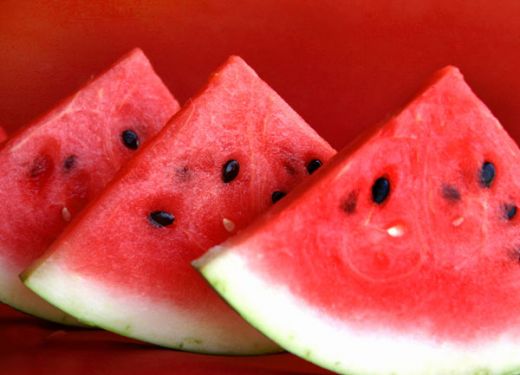
Found in: tomato paste/sauce*, watermelon, guava, pink grapefruit, papaya, red capsicum


*Unlike other fruits and vegetables, where nutritional content such as vitamin C is diminished upon cooking, the processing of tomatoes increases the concentration of bioavailable lycopene. Lycopene in tomato paste is four times more bioavailable than in fresh tomatoes. For this reason, tomato paste is a preferable source as opposed to raw tomatoes.

2. Lutein
A yellow caretenoid pigment, most often linked to optimal vision (lessen macular degeneration or age-related vision loss) and skin health (protects the skin against UV damage and increases skin hydration and elasticity).

Found in: peaches, mango, oranges, prunes

3. Zeaxanthin
Found in many of the same food sources as lutein and is strongly linked to eye health (protects eyes by filtering out UV light and lessens the risk of cataracts and age-related macular degeneration).

BOTH lutein & zeaxanthin are found in: spinach, kale, broccoli, peas, egg yolks, brussel sprouts, cabbage, kiwis, honeydew melon
4. Astaxanthin
A bright red pigment produced by microscopic plants such as algae, shown to enhance the immune system by increasing the number of anti-body producing cells.

An interesting fact: astaxanthin is unique in how it journeys into the human food chain. Many marine animals eat astaxanthin-rich algae which then becomes concentrated in their shells and flesh, giving them their red colour - this can vary in intensity.

Found in: salmon, trout, prawns, crayfish


5. Alpha & Beta carotene (α & β)
A rich red-orange pigment, classified as provitamin A compounds due to their conversion of retinol into an active form of vitamin A used by the body. Aside from providing your body with vitamin A, both α & β-carotenes protect cells from free radicals, enhance the immune system and support a healthy reproductive system.

β-carotene is the more powerful of the two, having twice the vitamin A activity than that of α. Research shows that β-carotene protects the skin by reducing the redness of UV-induced skin and improving melasma - a dark skin discolouration.

But too much intake of β-carotene can lead to carotenodermina - a yellow-orange discolouration of the skin, resulting in looking like an oompa-loompa! This is usually harmless and disappears once β-carotene intake returns to normal.

Found in: carrots, butternut squash, sweet potatoes, green beans, coriander, silverbeet, spinach, rockmelon


All of these carotenoids can be obtained through numerous food sources. Keep in mind that due to their fat-soluble molecular make-up, carotenoids need to be ingested with a healthy fat for optimal absorption in the digestive tract. Adding extra-virgin olive oil or nuts to your meal can do the trick.

So here is my challenge to you - see how colourful you can make your next meal by including as many different carotenoid-rich foods as you can!

JW


References
  • www.alive.com