Friday, October 24, 2014

Healthy Travels: THE MIDDLE EAST

أهلا ومرحبا بكم
Hello and welcome!

The Middle East: the land of mosques, beautiful spices, burqas, the world's tallest building and exotic Middle Eastern cuisine!


Geographically, the Middle East extends across Western Asia to Egypt and comprises of 17 nations: Bahrain, Cyprus, Egypt, Iran, Iraq, Israel, Jordan, Kuwait, Lebanon, Oman, Palestine, Qatar, Saudi Arabia, Syria, Turkey, United Arab Emirates and Yemen.

With so many different countries comprising the Middle East, it is no wonder there is an abundance of flavours, ingredients and textures, with something to suit everyone. Here are a few dishes that are not only healthy but epitomise the characteristics of true Middle Eastern cuisine!

CHOBAN SALAD (Çoban salatası)


Choban salad is a popular Turkish salad that means the "Shepherd's Salad" and is especially popular during summer. Light, refreshing and easy to make, the salad is a combination of finely chopped tomatoes, cucumbers, onions, green peppers and flat-leaf parsley, drizzled with a refreshing dressing of lemon juice, olive oil and salt.

THARID (ثريد‎)

Tharid is a traditional Arabic dish made of pieces of crispy flat bread (rigag) layered at the bottom of a dish, soaked in a vegetable and lamb broth. Chunky slices of vegetables (carrots, potatoes, zucchinis, tomatoes) and pieces of succulent lamb are cooked into a delicious stew then poured over crispy rigag, allowing the bread to soak up the rich flavours.

QUWARMAH ALA DAJAJ (ثريد‎)

Better known as Kuwaiti curried chicken, this dish is made with an abundant blend of Middle Eastern flavors and spices - lime, ginger, turmeric, baharat, cumin, cardamom, black pepper, cinnamon, nutmeg, paprika - that combine to give the chicken a distinctive pop.

TABBOULEH (تبولة‎)

Tabbouleh is a Lebanese dish traditionally made with tomatoes, finely chopped parsley, mint, and onion, and seasoned with olive oil, lemon juice, and salt. Bulgur is often added to the dish; some variations add garlic or lettuce, or use couscous instead of bulgur.

HUMMUS (حُمُّص‎)/BABA GHANOUSH (بابا غنوج)


Dips feature prominently in Middle Eastern cuisine, commonly served as part of meze platters. Hummus is a dip made from chickpeas - a powerhouse ingredient in Middle Eastern cuisine, mashed together with garlic, olive oil, tahini and lemon juice to form an extremely versatile and delicious dish. Baba ghanoush, a Levantine dish, is a dip made from cooked eggplant (aubergine) mixed with onions, tomatoes, olive oil and various spices.

So there you have it. We have reached the final culinary destination of our healthy travels. I hope you have enjoyed learning about healthy dishes from around the world and try them out on your travels!

بالهنا والشفا
Happy eating!

JW

Saturday, August 2, 2014

Healthy Travels: ITALY

Ciao e benvenuto!
Hello and welcome!

Italy: the land of the mighty Roman empire, the Colosseum, Renaissance art, the Catholic Church and delicious Italian fare!


When you think of Italian cuisine, most people will conjure up thoughts of pizza and pasta. But Italian food is so much more than that. Think hearty stews, fresh seafood, tomatoes galore, freshly pressed olive oil, and colourful salads. But as much as Italian cuisine encompasses the healthy characteristics of the Mediterranean diet, it also has another side - the unhealthy side. Think of the endless array of cheeses, creamy pastas and risottos, fritto misto, parmigiana, and don't even get me started on Italian desserts! But you don't have to search very hard to find healthy and delicious options. Here are some to get you started:

CACCIUCCO

Cacciucco is an Italian fish stew native to the western coastal towns of Tuscany and Liguria. A hearty dish, it is made of different types of fish and shellfish, with one tradition stating there should be five different types of fish in the stew - one for each letter c in the name. Aside from the seafood, there are also a number of other ingredients including various vegetables (onions, tomatoes, leeks, zucchini, squash), spices (garlic, aniseed, salt, pepper, thyme, parsley) and liquids (fish stock, vermouth, wine) - making up the beautifully fragrant broth. There are many variants of cacciucco, varying by region and availability of ingredients.

MINESTRONE

A robust soup of mixed vegetables, borlotti beans and pasta or rice, minestrone has origins that pre-date the mighty Roman Empire. With no fixed recipe, minestrone allows for the creation of a wonderful dish using a variety of ingredients depending on availability and preference.

PIEDMONT CARPACCIO

Carpaccio is the culinary term for thinly sliced raw meat. Piedmont carpaccio is a dish of very thinly sliced raw beef with shavings of white truffle or parmigiano, rocket, and a marinade of lemon juice and olive oil.

CACCIATORE

Cacciatore means "hunter" in Italian. In gastronomy, alla cacciatora refers to a dish that is prepared 'hunter-style'. Chicken is the most commonly used meat with rabbit also a popular choice. Cacciatore involves braising the meat in a tomato-based sauce with onion, herbs, capsicum (bell peppers) and wine. Cacciatore has many variations depending on the region. Southern Italian cacciatore often uses red wine, while Northern Italy has a preference for white wine.

CARCIOFI ALLA ROMANA


Carciofi alla Romana is a typical Roman dish that literally translates to "Roman-style artichokes". Stuffed with a mixture of parsley, lesser calamint, garlic, salt and pepper, the artichokes are then braised in a pot of water and wine until the liquid has evaporated.

PANZANELLA

Panzanella, also called panmolle, is a beautifully fresh Tuscan salad, popular in the Italian summer. With tomatoes, onions, fresh herbs, chunks of crusty bread and topped with an olive oil and vinegar dressing, panzanella is the perfect accompaniment to any meal. 

FAGIOLI ALL'UCCELLETTO

Fagioli all'uccelletto is the Italian version of baked beans, native to Tuscany - specifically Florence. A beautifully simple dish with cannellini beans stewed in a delicious tomato based sauce with fresh sage stirred through, the name 'Fagioli all'uccelletto' literally translates to “bird-style beans”.

So there you have it, Italy on a healthy plate!

Felici de mangiare!
Happy eating!

Next we head to our final culinary stop.......THE MIDDLE EAST!

JW


Sunday, July 6, 2014

HAPPY 3RD BIRTHDAY!

Today A Sense of Health celebrates its third birthday. A BIG THANK YOU to everyone who has read, supported and helped to spread the healthy word!

Just out of interest, here are some interesting stats for the last year:

  • 6 new articles written
  • Most read article: Olympic Wrap-Up
  • 1138 new readers
  • 9 new countries
  • Cape Verde, Egypt, Fiji, Guyana, Macau, New Caledonia, Saudi Arabia, Switzerland, Tunisia

    Stats since A Sense of Health's inception:
    • 49 articles written
    • 4394 readers
    • 92 countries altogether
    • Angola, Argentina, Australia, Austria, Bangladesh, Belgium, Bolivia, Bosnia & Herzegovina, Botswana, Brazil, Brunei, Bulgaria, Cambodia, Canada, Chile, China, Colombia, Costa Rica, Croatia, Cyprus, Czech Republic, Denmark, Ecuador, Estonia, Finland, France, Germany, Ghana, Greece, Honduras, Hong Kong, India, Indonesia, Iraq, Ireland, Israel, Italy, Jamaica, Japan, Jersey, Jordan, Kyrgyzstan, Latvia, Lebanon, Lesotho, Lithuania, Macedonia, Malaysia, Mauritius, Mexico, Moldova, Myanmar, Namibia, Netherlands, New Zealand, Nigeria, Norway, Pakistan, Peru, Philippines, Poland, Portugal, Romania, Russia, Serbia, Singapore, Slovenia, South Africa, South Korea, Spain, Sri Lanka, Sweden, Taiwan, Thailand, Trinidad & Tobago, Turkey, Ukraine, UAE, UK, US, Uruguay, Venezuela, Vietnam

    And here is something cool for the visual-types out there. As you can see, A Sense of Health has a strong international presence but has yet to be introduced to East and West Africa, and Central Asia. Let's change that!


    So here's to the next year ahead. May it be a happy and healthy one!!!

    JW

    Monday, June 23, 2014

    Healthy Travels: JAPAN

    こんにちは、ようこそ
    Hello and welcome!

    Japan: the land of the rising sun, cherry blossoms, sumo wrestling, politeness, and of course, healthy Japanese cuisine!


    Japanese food emphasises seasonal produce - predominantly seafood and vegetables. The Japanese diet is nutrient rich with staples such as yams and green tea (antioxidants); cruciferous vegetables (cancer preventing properties); seaweed (iodine); seafood (omega-3); shiitake mushrooms (iron, potassium, zinc, copper, and folate); and whole-soy foods. It is no surprise then that the Japanese have the longest life expectancy, with Okinawa Island having the highest ratio of centenarians (34.7) to inhabitants (100,000).

    Even though Japanese cuisine is considered one of the healthiest, there are many trappings that can trip you up. Sushi, despite it's healthy façade is predominantly made from stodgy white rice, which is heavily processed. It also has sugary rice vinegar added to it as flavouring meaning a "healthy" sushi meal may contain little more than mouthfuls of processed, sugary carbohydrates. To learn more about how sushi can make you fat, read: Sushi lovers BEWARE!

    So now onto the healthy stuff. Here are some authentic dishes you will find along your travels in Japan.

    YUDOFU ゆどふ

    Yudofu is a regional tofu delicacy of Kyoto. A popular winter dish, it consists of tofu pieces simmered in hot water or plain dashi soup. The simplicity of the dish allows the delicate flavours of the broth and the silky texture of the tofu to be savoured.

    SHABU-SHABU しゃぶしゃぶ

    Shabu-shabu is a very popular hot pot dish with thin strips of beef and seasonal vegetables placed into a pot of dashi and left until cooked. Not only healthy, shabu-shabu is also fun to eat, especially in groups - with a big pot of broth on an open flame placed in the middle of the table and platters of delicately sliced meat and fresh vegetables.

    EDAMAME えだまめ (hiragana) or 枝豆 (kanji)


    Eaten as a snack or appetiser, edamame are immature soybeans that are still intact in the pod. Packing plenty of nutritional punch, edamame are served boiled or steamed with a sprinkling of salt.

    SASHIMI さしみ (hiragana) or 刺身 (kanji)


    Sashimi is fresh, raw fish that is sliced very thinly and served uncooked. A traditional Japanese dish, it is usually served with daikon radish, pickled ginger, wasabi and soy sauce as the first course in a meal. A myriad of fish are used for sashimi including: tuna, salmon, sea bass, trout, sea bream and yellowtail. High in protein, many of the fish used for sashimi are also high in Omega-3 fatty acids - important protectants against heart disease.

    SOBA そば (hiragana) or 蕎麦 (kanji)


    Soba is the Japanese name for buckwheat. Soba noodles are a type of thin noodle made from buckwheat flour and are usually are served either chilled with a dipping sauce, or in hot broth as a noodle soup. Clockwise from top: sansai soba, soki soba, hiyashi soba.


    There is a lot to learn from the Japanese diet. Clean and simple flavours with an emphasis on fresh produce, Japanese food is about discovering the true characteristics of ingredients through simplicity.

      さようなら、幸せな食事!
      Goodbye and happy eating!

      Next stop, we head to.......ITALY!

      JW

      Monday, March 3, 2014

      Healthy Travels: GREECE

      Γεια σας και καλώς ήρθατε!
      Hello and welcome!

      Greece: the land of pristine coastlines, the Ancient Olympics, the Parthenon, a major economic crisis, and of course, delicious Mediterranean cuisine!


      Greek food is typical of the Mediterranean region - lashings of olive oil, bread and grains, various meats, vegetables and herbs, fresh seafood, and olives a plenty. And it is because of the emphasis on fresh and natural ingredients that Greek food is considered one of the healthier cuisines.

      However, there are still many trappings that can trip you up - specifically in the realm of desserts. Think baklava, loukoumades, diples and karidopitas. Greeks definitely put the sweet in sweets! Cheeses are also something you need to be cautious of. Of course you can sample the delicious array of cheese on offer - feta, graviera, kasseri, but enjoy them sparingly and if possible, ask to have it served on the side.

      It can be difficult to eat healthily on holidays so to make it a bit easier for you, make sure to include the following dishes in your many food adventures as you make your way through the beautiful Hellenic Republic!

      AVGOLEMONO (Αυγολέμονο)

      At first glance, this iconic Greek soup may appear as an unhealthy cream-based soup but looks are deceiving. Avgolmenono is actually made from egg, lemon, broth, rice/pasta and meat - typically chicken, but can be substituted for vegetables.

      DOLMADES (Ντολμάς)

      Delicate parcels of rice, toasted pine nuts, fresh herbs and seasoning wrapped beautifully in grape leaves (also known as vine leaves). Some versions have minced meat but traditionally, Greek dolmades are meatless.

      BRIAM (Μπριάμ)

      In Greece, vegetables do not play the supporting role. They grab the spotlight and rightly so. Briam, similar to a French ratatouille, is a vibrantly coloured medley of vegetables - potatoes, zucchini (courgette), aubergine (eggplant), tomatoes and peppers (capsicum), baked in a tomato-based sauce.

      SEAFOOD (Θαλασσινά)

      With endless stretches of pristine coastline, Greece is the place to go for fresh seafood. In contrast to Western countries, meat features less prominently in the traditional Greek diet than fish and other seafood. Fish and seafood are enjoyed in many different ways: grilled and seasoned with garlic and lemon juice, baked with yogurt and herbs, cooked in rich tomato sauce, added to soups, or served cold as a side dish. 

      GREEK SALAD (Χωριάτικη σαλάτα)


      The classic Greek salad is the perfect accompaniment to any meal or can suffice as a light lunch. However to avoid unwanted calories, make sure to take it easy on the feta and olives and ask to have dressing served separately.

      STIFATHO (Στιφάδο)

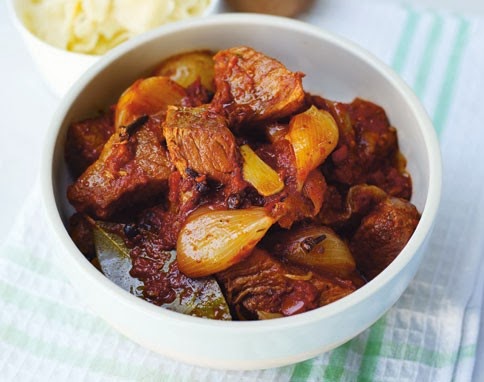
      A hearty stew made with equal parts meat (can also be seafood or vegetables) and onion - usually whole small boiler or pearl onions. The tenderness of the stew is achieved by slow cooking the two main ingredients in a tomato based sauce with wine/vinegar and a selection of herbs and spices.

      SOUVLAKI (Σουβλάκι)

      Grilled skewers of meat (pork, beef, lamb, chicken) served with salad, tzatziki and lemon. Some version of souvlaki have everything wrapped up in pita and others simply have pita served on the side (as above).

      Extra tips:
      • sharing is caring
      • ask for dressings, cheeses, etc to be served on the side
      • enjoy your food and eat slowly - means you are less likely to overeat
      • mezze (tapas) plates are deceiving - small portions do NOT necessarily equate to less calories
      • and most importantly, make sure to stay active!!!

      Καλή όρεξη!
      Eat well!

      Next stop, we head to.......JAPAN!

      JW

      Tuesday, February 18, 2014

      Healthy Travels

      “Food is our common ground, a universal experience.” – James Beard.

      For many, travelling to a new place is more about tasting the local cuisine rather than seeing the sights. As James Beard, a renowned gourmet chef and writer, wrote in Beard on Food (1974): "Food is our common ground, a universal experience". Food is a central part to culture and plays a pivotal role in our relationships, enjoyment of life and expansion of knowledge.

      However, too often do the pounds pile on when we travel, but this doesn't have to be the case. This does not mean missing out on that delicious croissant in Paris, it just means you have to increase your food knowledge before you go. And it also wouldn't hurt to pick up some of the local lingo as more often than not, the best food haunts are hidden away from touristy spots.

      Over the next few months, I will be writing a new series of articles on how to eat healthily when travelling. The first stop for A Sense of Health will be Greece!


      Απολαύστε!
      (Pronounced: Apolamváno̱!)
      (Translation: Enjoy!)

      JW

      Monday, February 3, 2014

      Every Step You Take

      ♪ Every step you take, every time you wake, every move you make, all the sweat you break, you're improving your health! ♪ Ok so I may not be the most musically talented person (and apologies to The Police) but you get my point. Every step you take during the day DOES count.


      This is particularly true for those just starting out. As cliché as it sounds, taking that first step is often the hardest, but the most important. So a good way to begin is by starting a walking routine. Walking has many benefits and this is supported by a plethora of research.

      Here are 10 reasons to get walking:

      1. Build energy and endurance
      Walking gets your blood flowing, improves circulation and increases energy levels.

      2. Lower your risk of diabetes
      Regular walking can help keep your blood sugar levels healthy and, in turn, reduce your chances of getting diabetes.

      3. Feel better
      Research shows that people who exercise regularly have fewer symptoms of depression and anxiety.

      4. Look after your heart
      Walking regularly can help lower your blood pressure and levels of 'bad' (LDL) cholesterol, improving your heart health.

      5. Stay in shape
      A brisk 30-minute walk can burn more than 500 extra kilojoules, helping you to feel and look good.

      6. Reduce your cancer risk
      According to the Cancer Council, physical activity, such as walking, can greatly reduce your risk of bowel and post-menopausal breast cancers.

      7. Build strong bones, joints and muscles
      Walking helps keep your bones strong to protect against osteoporosis - which affects both men and women, and stronger muscles can also better support joints, often easing the symptoms of arthritis.

      8. Prevent dementia
      According to studies, exercise may help protect against dementia by improving blood flow to the brain.

      9. Invest in your health
      Thirty minutes or more of walking on most days of the week (adding around 3,000 to 4,000 steps to your day) can help lower the risk of heart disease, diabetes and bowel cancer.

      10. It's easy
      Walking is a gentle, low-impact exercise that comes naturally to your body. It's simple and can ease you into a higher level of fitness and health.

      A few years ago, I wrote an article about the 10,000 steps challenge (The Little Things), which encourages people to walk 10,000 steps a day. This may seem like a lot but in reality, it is very achievable when you include all your daily activities such as running errands, walking around the office/house and of course, working out. To put it into perspective, here is a breakdown of the number of steps in relation to level of activeness.


      A great way to keep track of your steps in to invest in a pedometer. Pedometers measure the number of steps you take each day. There are plenty of different models on the market and something suitable for everyone. If you're just after something basic then the pedometer on the left is perfect - it shows the number of steps you've taken and at the start of every day, you simply press reset. The pedometer on the right is the Nike Fuel band which tracks the wearer's physical activity, daily steps, and calories burned. The information from the band is integrated into the Nike+ online community and phone application, allowing wearers to set their own fitness goals, monitor their progression, and compare themselves to others part of the community.


      This is also a great way to keep yourself accountable. By setting a daily goal, you have something to work towards - providing a sense of motivation to keep improving. And it doesn't matter where you start, as long as you stay persistent and consistent, and keep challenging yourself. You might be surprised how many or how few steps you actually take in a day!

      So set yourself a goal and let's get walking!

      JW

      Tuesday, January 7, 2014

      To a Happy and Healthy 2014!

      The new year has come around once again and what a great opportunity to make a happy and healthy start, setting the tone for the year ahead! Don't worry about what you did or didn't do last year - you have a clean slate and NOW is the time to take charge of your life!

      The festivities have come and gone so no more excuses. Say "YES I CAN" instead of "no I can't". Challenge yourself and make the most of all your opportunities; face your fears and tackle them head on. Many of us may have made New Year's resolutions as the clock ticked over midnight but they are often the downfall to our road to improvement. The dichotomous nature of New Year's resolutions means you either achieve your resolution or fail to do so. A more productive way to improve your health is to simply wake up each day and do something (albeit small or big) that improves your life or the lives of those around you.


      Make 2014 the year you do something positive to improve yourself. And keep watching out for new and exciting articles I have in store for the year ahead.

      So here's to a happy and healthier you in 2014!!!


      ★★ HAPPY NEW YEAR EVERYONE!!! ★★

      JW

      Tuesday, November 12, 2013

      What's your excuse?

      The last time you planned to exercise did you have to overcome a barrage of excuses? I'm sure just like me, you have come up with some oldies but goodies such as:
      "I'm too tired"
      "I'm too busy"

      So what can you do to overcome these excuses? There is no secret solution, but there are ways to help make it easier. So here are the top 5 excuses and ways to overcome them.

      1. I'M TOO TIRED
      This is an excuse everyone has used, including me (many times over). After a long day at school/work, you would rather just lie on the couch and watch TV. However, once you  actually drag yourself off the couch and to the gym/park, you’ll be surprised that you’ll feel better and more energised — not more exhausted. Working out improves muscle strength and boosts endurance. It gets your blood flowing and your cardiovascular system working more efficiently. And the more efficient your heart and lungs, the better your blood is able to deliver oxygen and nutrients to your tissues. When your tissues have the oxygen and nutrients they need, you have more energy. Also, when you exercise regularly, you sleep better, and when you sleep better, you have more energy to get through the day.


      2. I'M TOO BUSY
      Another favourite excuse used by many. You say you're too busy to exercise but somehow you find an hour to watch the latest episode of *insert your favourite TV show* (in my case, it is The Blacklist). It's all about setting priorities. If you want to exercise, it’s just a matter of making the time, whether that means getting up an hour earlier in the morning to go for a brisk walk or taking an hour for lunch and walking with co-workers rather than chatting away in the cafeteria. Or try breaking up your workout into mini workouts; fitting 20 minutes of exercise three times a day in between other tasks.


      3. IT'S TOO EXPENSIVE
      A gym membership can be costly especially if you do not utilise that membership. But cost shouldn’t be an excuse for not working out. One of the best free workouts you can do is start a walking routine. You can walk anywhere, and the only cost is a comfortable pair of shoes. Studies show that walking can help with weight loss, which can help ward off diabetes. If walking doesn’t excite you, you can do many other free exercises, like biking, dancing, or even household chores such as gardening or vacuuming. You can also invest in a few simple pieces of at-home exercise equipment and follow workout DVDs or routines on YouTube.
      4. I HAVE NO MOTIVATION
      This excuse is especially true for those just starting out. It's hard to push yourself when there is nothing motivating you. This is where goal setting is important. If you have a goal and a deadline, you are more likely to use that as your source of motivation. If you have a special event such as a birthday or a wedding coming up and you have been planning to get into shape for a while, use that event to push you every time you don't feel like exercising. Imagine the end result and you will get there much quicker. Another great source of motivation is working out with others who can push you and keep you accountable. If none of the above have worked for you, why not invest in a couple of sessions with a professional who can get you started on your fitness journey and provide tips on how to stay on track.


      5. EXERCISE IS BORING
      Sure, running on the treadmill for an hour can be a real bore as can riding on a stationary bicycle at the gym. But exercise doesn’t have to be boring at all. Why not try out the myriad of gym classes on offer or venture into the great outdoors and do a bit of hiking, skiing, mountain biking to break up the routine. Finding a fitness routine that works for you should just be a matter of trial and error. Another way to combat boredom is to change your exercise routine every six to eight weeks. Constantly changing your routine will keep it challenging, and can also get you over a weight loss plateau if you experience a stall on the scale.

      So the next time you find yourself saying one of these excuses, think about the bigger picture. Think about how improving your health and fitness can benefit those around you. Set a good example for your kids/friends/family. Nothing good is life ever comes easy, but hopefully these tips can make it slightly easier.

      JW